.webp)
Synthetic Tile Roof
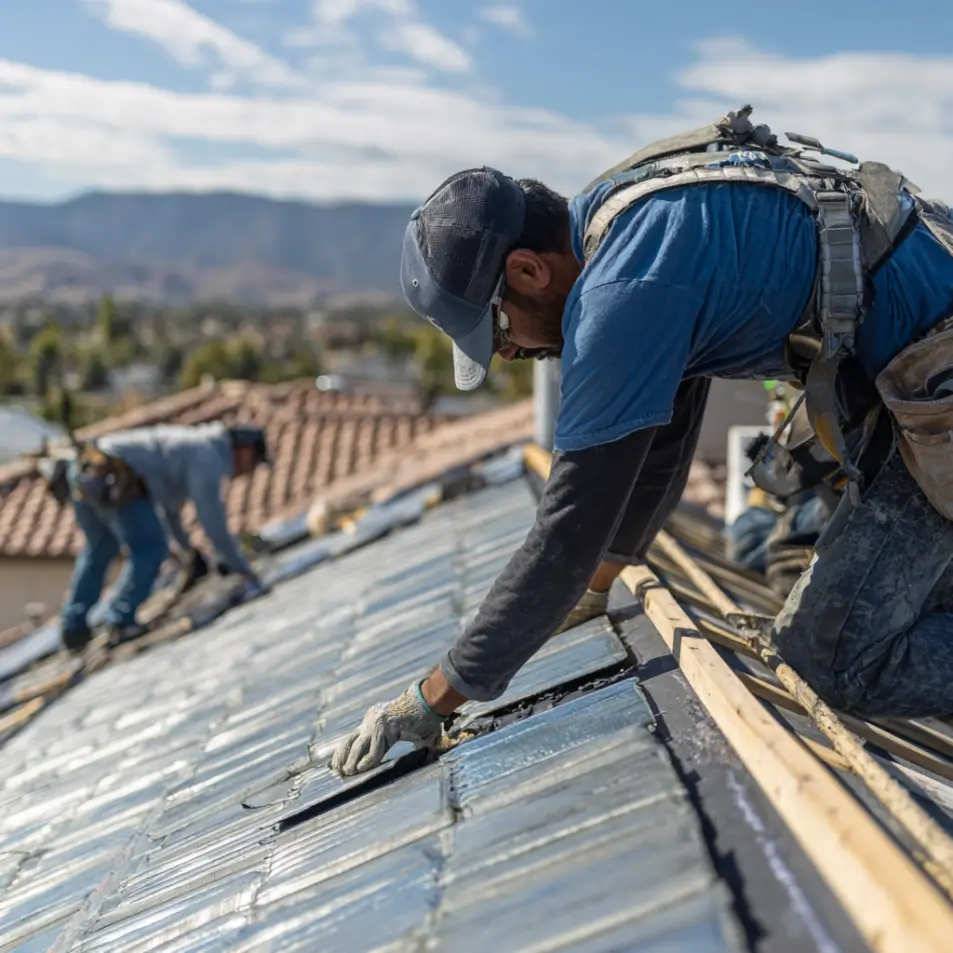
Synthetic Tile Roofing Installation and Replacement Across Fullerton
Professional synthetic roof installation in Fullerton. Expert roofers deliver quality shingles, repairs & replacements. Get your free estimate today.
Fullerton Synthetic Tile Roofing Services
Synthetic tile roofing has matured significantly over the past decade, and the best products available today represent a genuine alternative to clay, concrete, and natural slate, not a compromise. For homeowners who want the aesthetic of premium tile roofing with a lighter weight, lower maintenance profile, and strong performance in Southern California's climate, synthetic tile is worth serious consideration.
The category includes a range of products: polymer composites, rubber blends, and engineered materials that replicate the look of slate, clay barrel tile, cedar shake, or concrete tile. Product quality varies considerably, and the gap between the best synthetic tile products and the weakest is larger than in most other roofing categories. Material selection matters here as much as installation technique.
Brave Bird Roofing evaluates, installs, and repairs synthetic tile systems with attention to both product quality and installation standards. If you're considering synthetic tile for the first time, understanding what distinguishes a high-performing product and a properly executed installation will help you make the right choice.
Schedule an inspection or consultation to talk through your options with our team.
What Is Synthetic Tile Roofing?
Synthetic tile roofing encompasses a category of manufactured roofing products engineered to replicate the appearance of natural materials, primarily clay tile, slate, and cedar shake, using polymer composites, recycled rubber, or other engineered materials. Products in this category are cast with surface detail, color variation, and profile geometry designed to approximate the look of the natural material they reference.
The primary advantages of synthetic tile over natural clay, concrete, or slate are weight, impact resistance, and design flexibility. Quality synthetic tile products are significantly lighter than clay or concrete, which reduces structural demands and can simplify installation on structures where heavy tile would require reinforcement. Many synthetic tile products also carry Class 4 impact resistance ratings and strong wind resistance certifications.
The tradeoffs are primarily around long-term proven performance—clay and concrete tile have decades of field data behind them in Southern California's climate, and synthetic tile products are newer to the market. Product selection from manufacturers with demonstrated track records matters more in this category than in most others.
How Synthetic Tile Performs in Southern California's Climate
Synthetic tile products are engineered for specific climate performance parameters, and the best products available today handle Southern California's conditions well. Understanding the specific demands helps set the right expectations.
Heat and UV Exposure
UV stability is the most important performance characteristic for synthetic tile in Southern California's climate. Inferior synthetic tile products fade, chalk, or become brittle under sustained UV exposure; a failure mode that natural clay and slate do not share. Quality products use UV stabilizers and colorfast pigments that maintain their appearance over long timeframes, and manufacturer documentation on UV resistance is something we evaluate in every product we specify.
Thermal Expansion
Synthetic tile products expand and contract with temperature changes more than clay or concrete. Installation technique, particularly fastening patterns and joint clearances, must account for this movement. Improperly installed synthetic tile can buckle, crack at fastener points, or develop visible gaps as material cycles through seasonal temperature swings.
Santa Ana Wind Events
Synthetic tile's lighter weight means wind uplift is a more significant consideration than with clay or concrete. Wind resistance ratings vary considerably across synthetic tile products, and for homes in exposed hillside locations, canyon-adjacent areas, or open neighborhoods, wind resistance rating should be a primary selection criterion.
Coastal and Marine Conditions
Quality synthetic tile products are non-porous and do not absorb moisture the way concrete tile can. This is a genuine advantage in coastal and near-coastal communities where moisture cycling, salt air, and marine layer are ongoing factors. The primary coastal consideration for synthetic tile is UV stabilizer performance, which should be verified for the specific product before installation in high-exposure coastal zones.
What a Quality Synthetic Tile Installation Includes
Synthetic tile requires the same attention to the complete roofing assembly that any premium tile system demands. The tile surface is visible—everything beneath it determines how the system performs over time.
Deck Preparation
The existing deck is inspected and any damaged or deteriorated sheathing is replaced before new material is installed. Synthetic tile should not be installed over a compromised deck any more than natural tile should be.
Underlayment
Quality underlayment is the moisture management layer of the system. For synthetic tile, we select underlayment products appropriate for the tile profile, pitch, and climate zone. Synthetic tile's lighter weight does not reduce the importance of underlayment quality—it remains the actual waterproofing barrier of the assembly.
Fastening and Expansion Clearance
Synthetic tile installation requires precise attention to fastening pattern and expansion clearance—more so than natural clay or concrete. Fasteners must be set correctly for the specific product to allow thermal movement without inducing stress at fastener points. This is a technical requirement that distinguishes quality installations from shortcuts.
Flashing at All Transitions
Metal flashing is installed or replaced at every penetration, valley, wall intersection, and transition point. Flashing failure is the most common source of leaks in any tile system, and synthetic tile is no different. New tile over old or failing flashing is a setup for future problems regardless of how good the tile itself is.
Ridge and Hip Finishing
Ridge and hip caps are installed to manufacturer specifications. For synthetic tile, this typically means manufacturer-supplied cap pieces engineered to match the tile profile—field-fabricated caps are not an appropriate substitute.
Ventilation
Attic ventilation affects the longevity of all roofing systems, and synthetic tile is no exception. Proper ridge and soffit ventilation reduces heat buildup beneath the tile and extends the service life of both the tile and underlayment.
Synthetic Tile Repairs and Inspections
Synthetic tile roofs can typically be repaired at the individual tile level when damage is localized. Cracked or broken tiles, failed fastening at isolated locations, and flashing failures are all addressable with targeted repairs when the overall system remains sound.
We inspect synthetic tile systems for UV-induced surface degradation, cracking or delamination, fastener failures, thermal buckling, flashing condition, and underlayment performance. When repair is the right call, we source matching material where possible and address any underlying cause of the failure.
Annual inspections are valuable for synthetic tile systems, particularly in the first several years of a new installation—early identification of any fastening or movement issues prevents them from developing into larger problems over time.
Why Homeowners Choose Brave Bird Roofing for Synthetic Tile Projects
Synthetic tile is a category where product knowledge and installation experience matter more than in more standardized roofing systems. We evaluate both the material and the installation requirements on every project.
- Over four decades of roofing experience across Southern California
- Familiarity with the leading synthetic tile manufacturers and product lines
- Second-generation, family-owned — consistent oversight from start to finish
- Experienced with HOA approval processes, including working through synthetic tile approvals in communities that previously required natural tile
- Insurance claim guidance for wind and storm damage situations
- Honest, product-specific guidance based on actual performance data—not just what's easiest to install
Schedule Your Synthetic Tile Inspection or Consultation
Whether you're evaluating synthetic tile for a new installation, replacing a failing system, or repairing localized damage on an existing synthetic tile roof, we'll give you a clear picture of what the work involves and what your options are.
No pressure. No assumptions. Just an honest evaluation from a team that stays involved through the entire project.
Request your inspection today.
Common Questions About Synthetic Tile Roofing
How long does synthetic tile last in Southern California?
Quality synthetic tile products carry warranties of 30 to 50 years, and real-world performance data on the best products supports multi-decade service life in Southern California's climate. UV stability is the most important factor in actual longevity—lower-quality products fade or become brittle significantly faster. Manufacturer warranty terms and UV performance documentation are things we review before specifying any synthetic tile product.
Can synthetic tile fool HOAs that require natural clay or slate?
High-quality synthetic tile products are difficult to distinguish from natural clay or slate at ground level, and many HOAs in Orange County that previously required natural tile have approved synthetic alternatives. We have experience navigating HOA approval processes and can help document the product for community review.
Is synthetic tile better than concrete tile?
It depends on the specific application. Synthetic tile's primary advantages over concrete are weight and impact resistance. Concrete tile has a longer proven track record in Southern California's climate. For structures where weight is a constraint, or in locations where impact and wind resistance are priorities, high-quality synthetic tile is a genuinely competitive option. For structures where neither weight nor impact are primary concerns and a maximum proven service life is the goal, concrete or clay tile may be the better choice.
Does synthetic tile require special structural consideration?
Most synthetic tile products are light enough that standard residential framing can accommodate them without reinforcement—this is one of the category's primary advantages. However, a structural assessment is still part of our evaluation process on every project.
How does synthetic tile hold up in the Santa Ana winds?
Wind resistance varies by product. Many quality synthetic tile products carry wind resistance ratings of 110 mph or higher, and some carry ratings to 150 mph. For homes in exposed or hillside locations, wind resistance rating is a primary selection criterion we weigh carefully.
Can I install synthetic tile over my existing roof?
We generally recommend a full tear-off before any tile installation—synthetic or otherwise. Removing the existing material allows full inspection of the deck, installation of fresh underlayment, and ensures the new system performs to its rated specifications. Overlaying conceals the deck's condition and limits our ability to warrant the installation.
Your Trusted Fullerton CA Roofing and Exteriors Company
When it comes to protecting your home, you deserve a team you can trust completely—one with the experience, credentials, and accountability to back up every promise they make.
Brave Bird Roofing has been that team for Southern California homeowners since 1986. Whether you're facing an urgent repair or planning a long-term exterior upgrade, we're here to walk you through it with honesty and care.
Schedule your Inspection today and experience the difference that 40 years of family-owned craftsmanship makes.