.webp)
Composite Shingle Roof
Composite Shingle Roof in Fullerton — Done Right
Professional composite shingle roof installation in Fullerton. Expert roofers deliver quality shingles, repairs & replacements. Get your free estimate today.
Composite Shingle Roofing Installation and Replacement in Fullerton and Across Fullerton
Composite shingles are one of the most widely installed roofing materials in Fullerton and across Southern California—and for good reason. They offer a practical combination of durability, design flexibility, and cost efficiency that works well across a wide range of home styles and climates throughout Orange County and the surrounding region.
But not all composite shingle installations perform the same way. The material itself is only part of the equation. Ventilation, underlayment selection, installation technique, and proper system integration all determine how long a composite shingle roof actually lasts and how well it holds up through heat cycles, wind events, and seasonal moisture.
Brave Bird Roofing installs, repairs, and inspects composite shingle systems with attention to every layer of the roof—not just the surface. If you're considering composite shingles for the first time or replacing an existing system, understanding what goes into a quality installation helps you make the right decision for your home.
Schedule an inspection or consultation to talk through your options with our expert roofing team in Fullerton.
What Are Composite Shingles?
Composite shingles—also called asphalt shingles—are manufactured from a fiberglass mat base coated with asphalt and topped with ceramic granules. They're engineered to resist UV degradation, wind uplift, and moisture infiltration, and they're available in a wide range of profiles, weights, and colors.
Modern composite shingles are a significant improvement over older asphalt products. Architectural and dimensional shingles, in particular, offer a layered appearance that mimics the look of wood shake or slate at a fraction of the cost—without the maintenance demands or HOA complications that can come with those materials.
The most important distinctions between composite shingle products come down to weight, wind resistance rating, impact resistance classification, and warranty length. These factors affect both performance and long-term value, and they vary considerably across product lines.
Types of Composite Shingles We Install
Three-Tab Shingles
The most basic composite shingle profile—flat, uniform, and lightweight. Three-tab shingles are less common in new installations today but remain a cost-effective option for specific applications, budget-driven repairs, or projects where HOA guidelines require a lower-profile appearance.
Architectural / Dimensional Shingles
The most widely used composite shingle type in Fullerton and across Southern California. Architectural shingles have a laminated, multi-layer construction that creates depth and shadow lines, giving roofs a more refined appearance than three-tab products. They also carry higher wind resistance ratings and longer manufacturer warranties. This is the category we most commonly recommend for full replacements.
Impact-Resistant Shingles
Rated Class 3 or Class 4 for impact resistance, these shingles are designed to hold up against hail and wind-driven debris. While Fullerton isn't known for severe hail events, impact-resistant shingles offer added durability in areas prone to falling debris, strong Santa Ana winds, or high-heat environments that cause faster granule loss. Some insurance carriers also offer premium discounts for Class 4 installations.
Designer / Premium Shingles
High-end composite shingles engineered to replicate the appearance of slate, cedar shake, or natural wood with greater precision. These are a strong option for homeowners seeking a premium aesthetic without the cost, weight, or maintenance of natural materials—and they're increasingly accepted by HOAs that previously required tile.
How Composite Shingles Perform in Fullerton's Climate
Fullerton's climate presents a specific set of demands that composite shingle systems need to be selected and installed for—not just adapted to after the fact.
Heat and UV Exposure
Orange County and surrounding areas see consistent sun exposure year-round. Over time, UV radiation breaks down the asphalt binders in shingles and causes granule loss—the protective ceramic layer that shields the material underneath. Higher-quality architectural shingles use algae-resistant and UV-stabilized granules that slow this process considerably. Proper attic ventilation reduces the heat load on shingles from below, which is equally important.
Santa Ana Wind Events
Wind uplift is one of the primary causes of shingle failure in Fullerton. Composite shingles are rated for wind resistance, typically ranging from 60 mph on basic products to 130 mph or higher on premium lines. For homes in hillside locations, canyon-adjacent areas, or open-exposure neighborhoods, wind resistance rating should be a primary selection criterion—not an afterthought.
Seasonal Moisture and Marine Influence
Coastal and near-coastal communities in Orange County experience seasonal marine layer, morning condensation, and occasional heavy rain events after dry periods. Composite shingles in these zones benefit from quality underlayment, sealed penetrations, and proper flashing at all transitions—preventing moisture from finding its way into the system during the periods when it does arrive.
Temperature Cycling
The daily and seasonal temperature swings in Fullerton cause roofing materials to expand and contract repeatedly over time. Quality composite shingles are designed with this in mind, but installation technique matters—improper nailing patterns or inadequate starter strip application can cause shingles to crack, lift, or separate over time as materials move.
What a Quality Composite Shingle Installation Includes
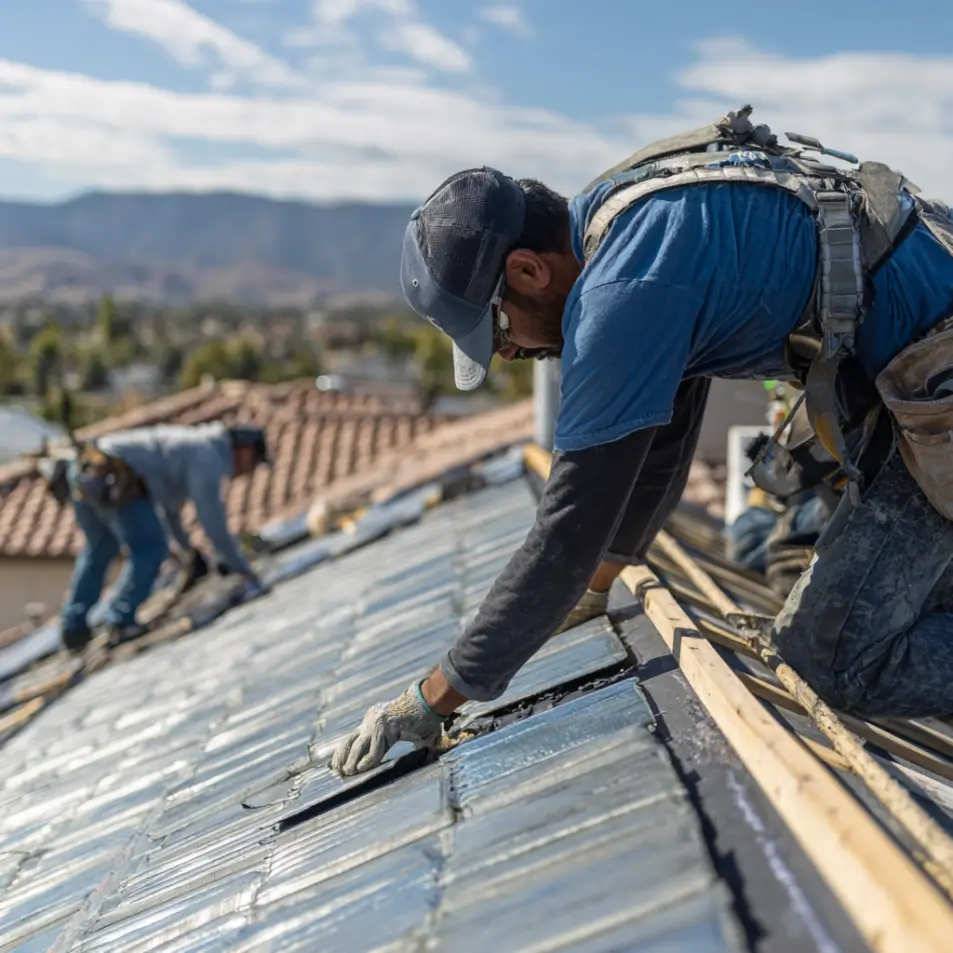
The shingle itself is visible. Everything beneath it determines how the system actually performs. A complete, properly executed composite shingle installation includes the following components working together.
Deck Preparation
Before any new material goes down, the existing deck is inspected and any damaged, soft, or deteriorated sheathing is replaced. Installing new shingles over a compromised deck shortens the life of the entire system.
Underlayment
Synthetic underlayment is installed over the deck as a secondary moisture barrier. In Fullerton, synthetic products are preferred over traditional felt for their dimensional stability in heat and their improved resistance to moisture infiltration during installation and over time.
Ice and Water Shield
Applied at vulnerable zones—eaves, valleys, and around all penetrations—ice and water shield provides an additional layer of waterproofing protection where water is most likely to concentrate or back up.
Starter Strip
A factory-applied starter strip along the eave edge provides the adhesive bond needed to keep the first course of shingles from lifting under wind pressure. This step is frequently skipped or done incorrectly in lower-quality installations, and it's one of the first places wind damage originates.
Shingle Installation
Installed to manufacturer specifications with correct nailing patterns, exposure, and alignment. Nailing position is critical—shingles nailed too high or at inconsistent depths compromise both wind resistance and warranty coverage.
Flashing at All Transitions
Metal flashing is installed or replaced at every roof penetration, valley, wall intersection, and transition point. Flashing failures are the most common source of leaks in otherwise intact composite shingle systems—new shingles over old or failing flashing is a setup for future problems.
Ridge Cap and Ventilation
The ridge is finished with matching ridge cap shingles, and ridge venting is assessed or installed to ensure the attic can exhaust heat effectively. Ventilation is often the most overlooked element of a composite shingle installation—and the one with the greatest impact on long-term shingle life.
GAF Composite Shingle Products
As a GAF Certified contractor, Brave Bird Roofing installs GAF composite shingle products and backs eligible installations with enhanced warranty coverage available only through certified contractors.
GAF's architectural and premium shingle lines offer strong performance across Fullerton's climate demands—with wind resistance ratings, algae resistance treatments, and warranty terms that reflect the quality of the product when installed correctly.
Certification isn't just a credential. It reflects a requirement to follow installation standards that protect both the product warranty and the homeowner's long-term investment. We maintain that standard on every project.
Composite Shingle Repairs and Inspections
Not every composite shingle issue requires a full replacement. Targeted repairs extend the life of a functioning system when damage is localized, installation defects are limited in scope, or a specific area has failed while the rest of the roof remains sound.
We assess composite shingle systems for granule loss, cracking, lifted or missing shingles, flashing failures, and ventilation deficiencies. When repair is the right call, we make the repair correctly—matching material, correcting any underlying issues that contributed to the failure, and documenting the work.
Annual inspections are the most effective way to catch problems before they become costly. We recommend scheduling an inspection after any significant wind event, following heavy rain after a prolonged dry period, or any time you notice visible changes in your roof's appearance from the ground.
Why Homeowners Choose Brave Bird Roofing for Composite Shingle Projects
Composite shingle roofing is one of the most common services we provide, and we approach every project with the same level of detail—whether it's a straightforward replacement or a more complex multi-surface installation on a hillside home.
- Over four decades of roofing experience in Fullerton and across Southern California
- GAF Certified installation with enhanced warranty options
- Second-generation, family-owned — consistent oversight from start to finish
- Experienced with HOA approval processes across Orange County communities
- Insurance claim guidance for storm and wind damage situations
- Clear, honest recommendations based on actual roof conditions
Schedule Your Composite Shingle Inspection or Consultation
Whether you're replacing an aging system, repairing localized damage, or simply trying to understand the condition of your current roof, we'll give you a clear picture of where things stand and what your options are.
No pressure. No assumptions. Just an honest evaluation and straightforward guidance from a team that stays involved through the entire process.
Request your inspection today.
Common Questions About Composite Shingle Roofing in Fullerton
How long do composite shingles last in Fullerton?
Quality architectural shingles typically last 25 to 30 years in Fullerton with proper installation and ventilation. Premium and impact-resistant products can last longer. Heat exposure and attic ventilation have the greatest influence on actual lifespan—shingles on a poorly ventilated roof will wear significantly faster than the same product on a well-ventilated one.
What's the difference between architectural and three-tab shingles?
Architectural shingles are thicker, heavier, and have a laminated construction that creates a dimensional appearance. They carry higher wind resistance ratings and longer warranties than three-tab products. Three-tab shingles are flatter and lighter, and while they're less expensive, they're less common in full replacements today due to their lower performance profile.
Can composite shingles be installed over my existing roof?
In some cases, a second layer of shingles can be installed over an existing layer. However, we generally recommend a full tear-off to inspect the deck, replace deteriorated sheathing, and install fresh underlayment. Layering shingles conceals the deck's condition and can reduce the performance and warranty coverage of the new installation.
Do composite shingles work with solar panels?
Yes. Composite shingles are compatible with most residential solar panel mounting systems. If you're planning a solar installation in the near future, it's worth coordinating the roofing replacement first—replacing the roof after panels are installed is more complicated and costly.
Are composite shingles a good fit for HOA-governed communities?
Increasingly, yes. Many HOAs in Orange County that previously required tile are approving high-quality architectural and designer composite shingles. We can help navigate the approval process and provide the documentation your community requires.
How do I know if my composite shingle roof needs repair or full replacement?
Age, granule loss, curling or cracking shingles, and repeated localized failures are the primary indicators that a system is approaching the end of its serviceable life. An inspection gives you a clear answer based on actual conditions rather than guesswork.
Related Services
.webp)
Your Trusted Fullerton CA Roofing and Exteriors Company
When it comes to protecting your home, you deserve a team you can trust completely—one with the experience, credentials, and accountability to back up every promise they make.
Brave Bird Roofing has been that team for Southern California homeowners since 1986. Whether you're facing an urgent repair or planning a long-term exterior upgrade, we're here to walk you through it with honesty and care.
Schedule your Inspection today and experience the difference that 40 years of family-owned craftsmanship makes.